Case Study
Reveal
A working art studio ran on spreadsheets, email threads, and memory. Reveal replaced all of it with one system the whole team uses every day.
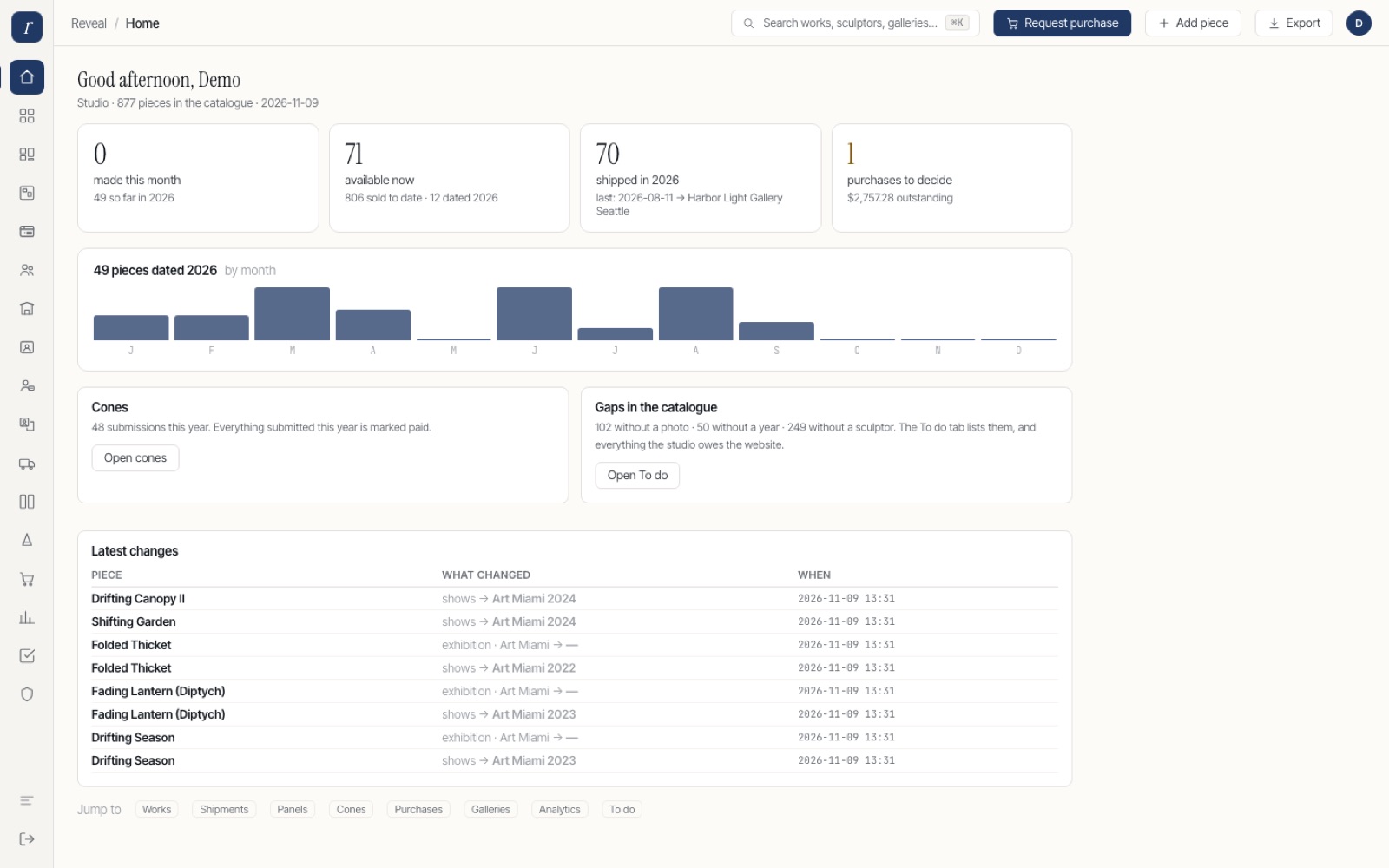
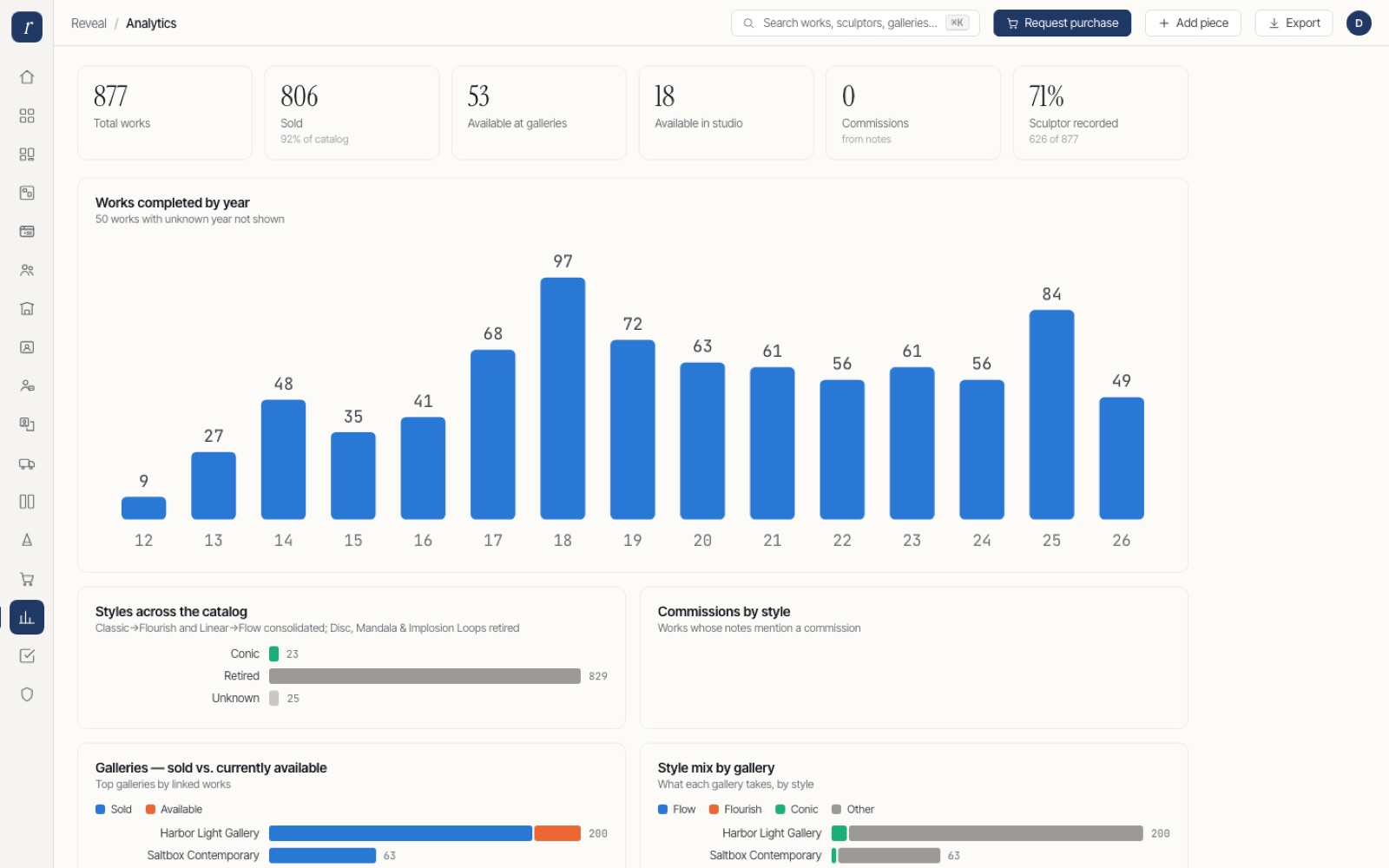
877
Artworks tracked
429
Shipments logged
~200
Features & routes
3
Integrations
The Problem
The studio produces hundreds of pieces a year across a team of sculptors and contractors, shipping to galleries around the country. Tracking where every piece was, who worked on it, what had shipped, and who needed paying lived in spreadsheets and people’s heads.
Reveal started as a migration out of Excel and grew into the studio’s operating system.
01
The Catalogue
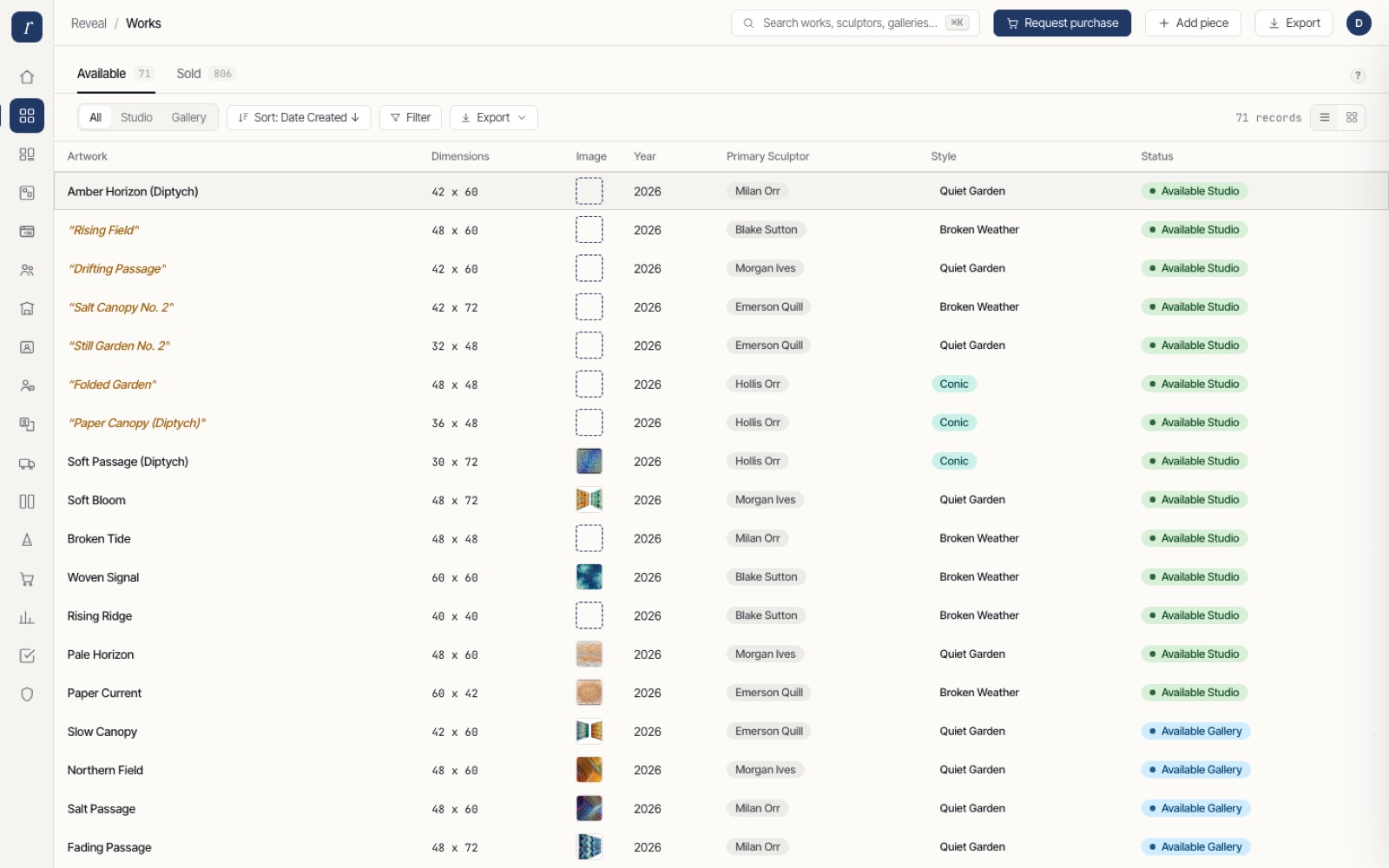
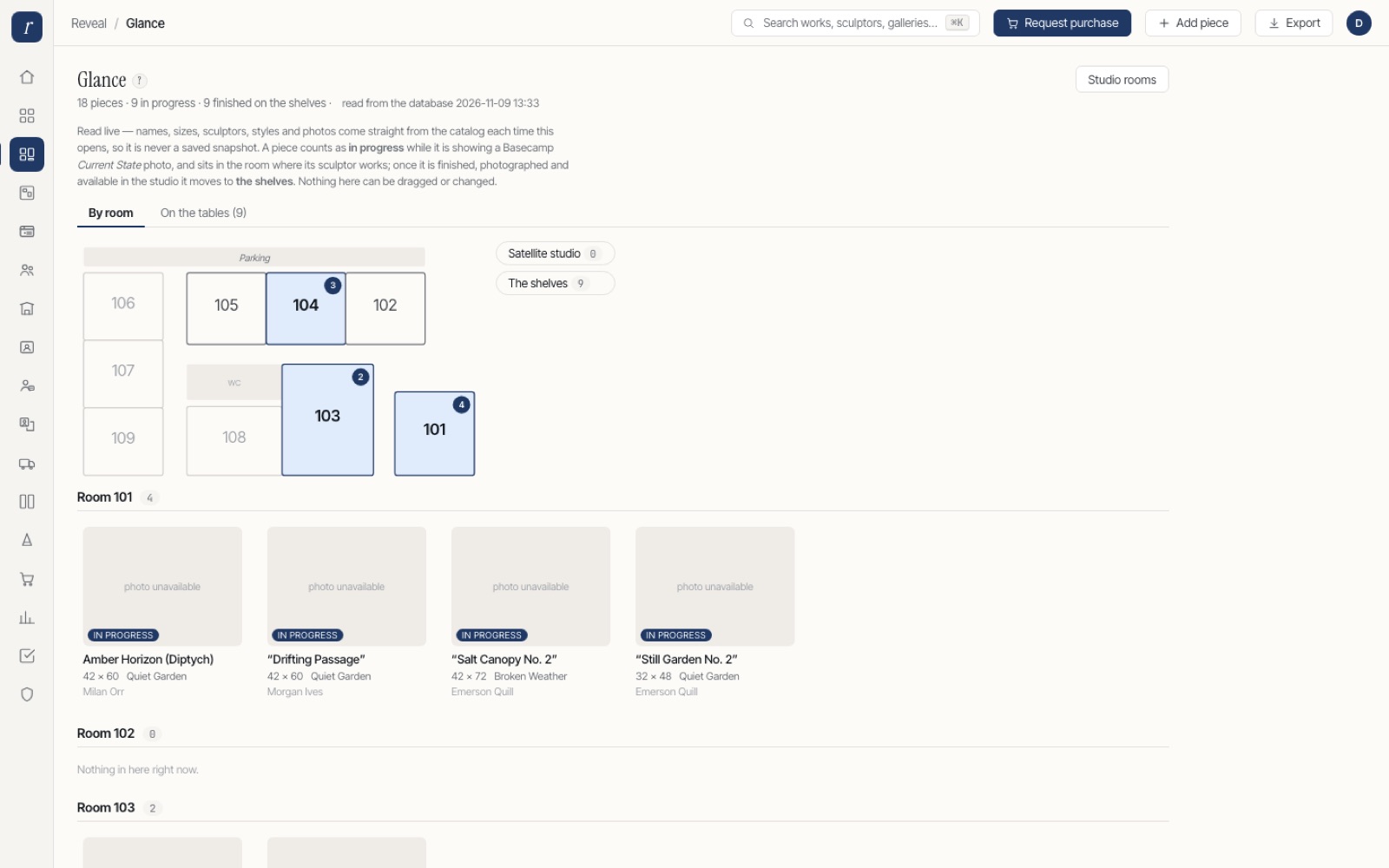
Every work in one place: status, dimensions, format, the sculptors and team who made it, which gallery holds it, progress photos, and a full history. Search, filters, and a command palette make any piece a few keystrokes away.
02
Shipping & Galleries
Shipments are built from the catalogue, with printable shipping lists and a sent report. Galleries, contacts, clients, and commissions are tracked alongside, so the full story of a piece follows it.
03
Materials & Purchasing
Panel inventory with sizes, prices, orders, stock movements, and reconciliation. A purchase-request flow lets the team ask for supplies and lets managers approve them.
04
Contractor Pay
A payroll system for piece-rate contractors: submissions, rates, approvals, yearly close-out, and analytics. Contractors get their own simple portal. Nearly a thousand submissions run through it.
05
Website Audit
Reveal reads the studio’s public website and checks it against the database: pieces missing from the site, dead links, and pages it can match automatically. The website and the records finally agree.
06
Connected & Safe
Syncs with Basecamp projects and photos, links Dropbox archives, and pushes to Google Sheets. Exports to Excel and Word. Role-based logins for admins, staff, and contractors, an access log, and automatic backups.
The work — demo data, names changed
The Result
Reveal is the system the studio runs on: one source of truth for the catalogue, shipping, materials, and pay, replacing a pile of spreadsheets. It’s a good example of what custom software can do for a small business with a messy, specific workflow.